When summer humidity hits Central New York, many homeowners find that even when the AC is running, the indoor air can feel heavy, damp, and sticky. If your house is feeling inescapably humid, you may be looking at your leaky windows as the culprit that is allowing the humid summer air in.
But before you spend tens of thousands of dollars on a full home window replacement evaluation, there is a crucial building science reality you should know:
New windows alone will rarely solve a sticky, humid house.
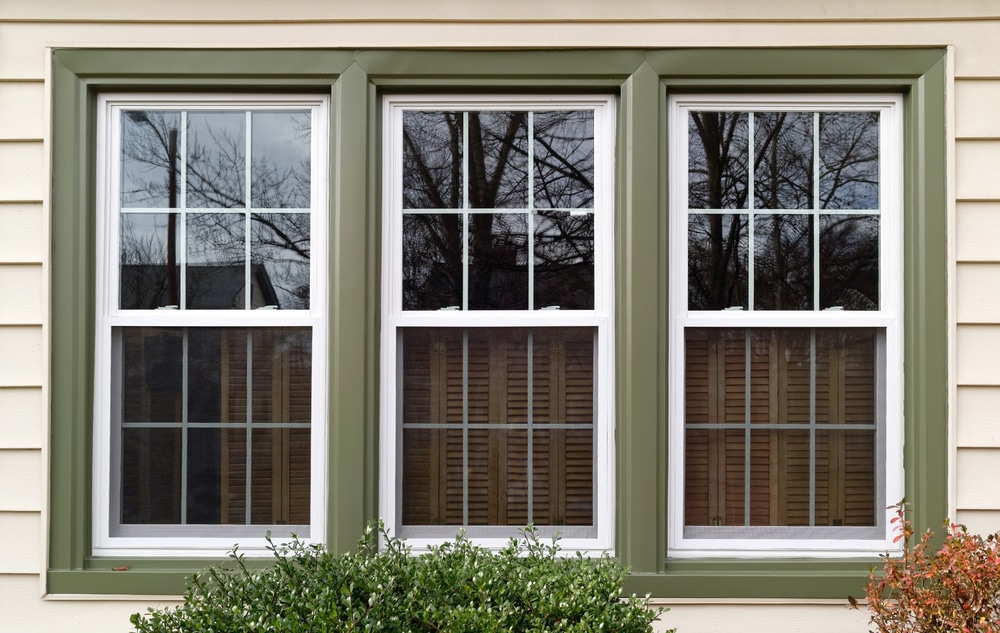
Why Glass Isn’t the Silver Bullet
While high-performance windows, such as those that qualify for NYSERDA incentives, are excellent for reducing noise, improving security, blocking radiant heat, and improving the look of your home, they do not control the bulk moisture flow of your home.
In most cases, high indoor humidity is a system-wide issue rather than a window failure. The root cause is typically air leakage combined with attic or crawlspace insulation failures.
The Stack Effect: How Moisture Actually Infiltrates Your Home
Your home behaves like a two-way chimney. Under a phenomenon known as the “stack effect,” warm, humid air is drawn into the lower levels of your home (like a damp basement or crawlspace) and pulled upward through the living spaces before escaping through leaks in your attic.
If your home’s envelope is unsealed:
- From the Ground Up: Moisture from the earth evaporates in your crawlspace or basement and is drawn up into your living areas.
- From the Top Down: Super-heated, humid attic air pushes down into your living spaces through unsealed light fixtures, wire penetrations, plumbing bypasses, and any uninsulated areas.
When there is an active moisture and air invasion from your attic or foundation, your air conditioner will have to overcome it before making your home any more comfortable. Air conditioners cool the air and remove a moderate amount of moisture as a byproduct, but they are not designed to act as heavy-duty, whole-home dehumidifiers. This leaves you with frigid and dry AC air mixing with hot, humid air, leaving you with a “cold but clammy” feeling. Buying new windows won’t plug these massive attic and basement bypasses.
When Windows Are Worth It, and When They Aren’t
To make the smartest investment for your home, it helps to distinguish when window replacement makes sense:
- When it’s worth it:
- If your windows are physically failing, meaning they are rotting, letting rainwater in, showing condensation between the double panes, or are functionally broken (won’t open, close, or lock), replacement is highly recommended to protect your home’s structure and improve your home’s security.
- When it isn’t the priority
- If your number one goal is lowering utility bills or eliminating a muggy indoor feeling, your budget is far better spent on professional air sealing and insulation. These upgrades have a significantly higher return on investment and directly target the root causes of both draftiness and humidity.
Start with a Home Audit for a Whole-Home View
Instead of guessing where your comfort issues are coming from, you can take a diagnostic approach. Before making any major investments, schedule a reduced-cost (and in many cases, free) home energy audit with Energy Savers. This comprehensive assessment provides a professional diagnosis of your entire home’s performance, looking at it as an interconnected system. Plus, at the end of every audit, Energy Savers gives you a detailed report of findings so you can make confident, informed decisions for your home.
What happens during an energy audit?
During the visit, an Energy Savers energy advisor will:
- Perform a Blower Door Test: This depressurizes your house to measure its overall airtightness and locate exactly where humid outdoor air is leaking in.
- Use Thermal Imaging: Infrared cameras will reveal hidden gaps in your insulation inside walls, attics, and crawlspaces.
- Conduct Safety & Moisture Inspections: They will check your heating and cooling equipment for safety and evaluate your basement, crawlspace, and attic for bulk moisture issues.
By looking at the whole home first, you will get a clear roadmap of which upgrades will actually solve your comfort issues. You might discover that a targeted air sealing and insulation project, which most often costs less than a full window replacement, will resolve your humidity problems. And if the assessment confirms that window upgrades are indeed necessary, you can proceed with confidence.
Stop Guessing. Start Living Comfortably.
Don’t let a sticky, humid house ruin your summer comfort. Contact Energy Savers today to schedule your home energy assessment and find out exactly what your home needs to stay cool, dry, and energy-efficient all year round.